
You’ve probably heard the expression “the money is in the list.”
And it’s true. Email marketing can deliver a strong ROI, and GetResponse has multiple case studies showing how businesses use email to generate revenue.
There is also more than one way to make money with email marketing. You can use your list to promote affiliate offers, sell your own products, run paid newsletters, offer online courses, sell sponsored placements, and host paid webinars.
This guide covers seven practical ways creators, affiliate marketers, coaches, and marketers can turn an email list into a revenue source.
💡 Did you know? GetResponse can help you run your email campaigns more effectively and generate income. By joining the affiliate program, you can earn recurring commissions, with rates that can reach 40% to 60% depending on the number of referred paying customers. Join the program today!
TL;DR – How to make money with your email list
Here’s a summary table of the 7 ways to make money with your email list:
| Method | Best for | Difficulty | Revenue potential |
|---|---|---|---|
| Affiliate marketing | Creators and niche experts | Low to medium | Medium to high |
| Sponsored content | Newsletter owners with engaged lists | Medium | Medium |
| Tripwire offers | Coaches, consultants, and creators | Medium | Medium |
| Products or services | Experts and businesses | Medium to high | High |
| Paid newsletters | Creators with loyal audiences | Medium | Medium to high |
| Paid courses | Educators, coaches, and experts | High | High |
| Paid webinars | Experts and B2B creators | Medium to high | Medium to high |
How to make money with an email list: 7 actionable ways
Before going over the monetization tactics, it is worth setting the right expectation.
Even though email marketing can deliver strong returns, it is still a long-term channel. Building an engaged email audience takes time, consistency, and trust. The money does not come from the list alone. It comes from the relationship you build with the people on it.
So if someone promises that you will generate an extra $5,000 from email after 30 days of work, be careful. Email can become a strong revenue channel, but it usually takes time to build the audience, offer, and trust needed to make it work.
With that out of the way, here are the main ways to make money with email marketing.
1. Use affiliate marketing to promote other people’s products or services
One of the most common ways to make money online is by joining an affiliate program.
The process is straightforward: you choose a brand with an affiliate program, sign up, get a unique affiliate link, and promote its products or services to your email subscribers. When someone buys through your link, you receive a commission.
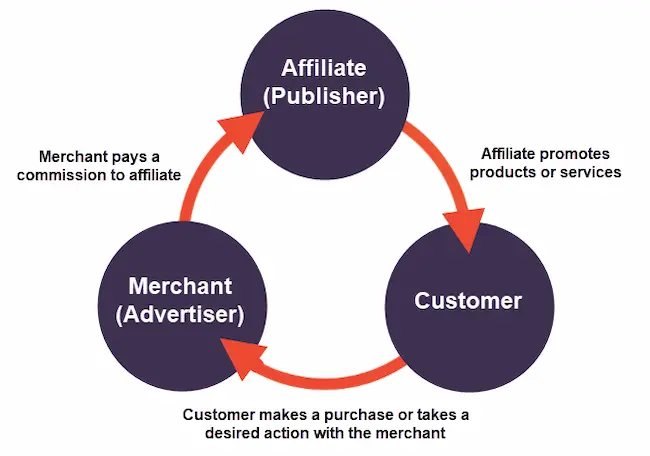
Let’s say you’re a personal finance blogger and online coach. The most fundamental way for you to capitalize on your position as a financial expert is to tap into the affiliate products offered by FinTech software such as eToro, Binance, or Robinhood:

Another option in this niche is to partner with banks, fintech companies, or financial platforms that offer affiliate programs. Commission rates vary by product, region, and affiliate network, so always check the current terms before promoting an offer.

How does affiliate marketing work?
Before getting into the technical side of this marketing channel, the key is to promote products or services that meet both of these requirements:
- They are trustworthy enough that you can put your name behind them. Do not promote a poor product just because the commission is high. If you lose credibility with your audience, you lose one of your most valuable business assets.
- You have knowledge and experience in a specific niche, so you can use your credibility to promote products connected to your expertise.
For example, Michał Szafrański, one of Poland’s best-known personal finance bloggers, became widely known for earning significant affiliate income from finance-related content. That success was possible because he had built a strong personal brand and a high level of trust with his audience.
Here is how the process usually works:
- Choose merchants that offer relevant affiliate products for your niche. If you are still looking, check out our curated list of best affiliate marketing programs.
- Sign up for the merchant’s affiliate program and get a unique affiliate link.
- Promote the product to your audience. In this case, the main channel is your email list, but there are other ways to promote affiliate links too.
- Both merchants and affiliates can monitor the performance of those email campaigns by tracking impressions, clicks, and sales.
- You get paid based on the program’s commission model, such as a sale, lead, conversion, or app install.
Affiliate products can be a reliable way to generate income from your email list, especially when the offer is relevant, trustworthy, and naturally connected to the content you already send.
For instance, GetResponse’s affiliate program offers recurring commissions, with rates that can reach 40% to 60% depending on the number of referred paying customers.
👉 Learn more with our affiliate marketing for beginners guide and how to build an email list for affiliate marketing.
2. Sell sponsored content or advertising in your emails
Another way to make money with email marketing is to sell sponsored placements in your newsletters or dedicated promotional emails.
This works best once you have an engaged list and a clear audience niche. Some newsletter sponsorship marketplaces accept smaller lists, but advertisers usually care more about audience fit, open rates, click rates, and trust than list size alone.

A larger, more engaged email list usually gives you more pricing power. Advertisers are more likely to sponsor your newsletter when they can clearly see who your audience is, how engaged they are, and what kind of results past placements generated.
Pricing often uses CPM, which stands for cost per thousand impressions. This helps you and the advertiser estimate the price of a newsletter placement based on audience size and expected views.
How about solo ads?
A solo ad works like this: an advertiser pays an email list owner to send a dedicated promotional email to that list. In simple terms, a brand buys access to an existing email audience for one campaign.
Solo ads have a mixed reputation because low-quality lists can lead to poor results and spam complaints. They can still work when the list is permission-based, highly relevant, and genuinely engaged.
To make it work, make sure that:
- Sponsored emails you send to your subscribers align with your audience’s interests
- Your list is permission-based, clean, and compliant with email marketing regulations
- You do not overuse sponsored sends or give subscribers a reason to opt out
Monetize your newsletter with sponsored content
Brands often look for ways to reach niche audiences beyond paid social and display ads.
Once your newsletter has a clear audience and strong engagement, brands that match your niche may be open to sponsoring it.

There are three common ways to monetize a newsletter with sponsorships:
- Classified ads: smaller placements included inside your newsletter
- Dedicated emails: one email focused on one sponsor or offer
- Sponsored placements: a more prominent ad slot inside your regular newsletter
Once you choose a format, decide how you will price it. You can use a flat fee for each placement, or calculate pricing with a CPM model: cost of the placement divided by the number of expected impressions, multiplied by 1,000.
From there, you can contact potential sponsors directly or use newsletter sponsorship marketplaces such as Paved, Who Sponsors Stuff, SponsorGap, and Passionfroot.
Pro tip: Do not wait for sponsors to contact you. Make a shortlist of brands that fit your audience and reach out with a clear sponsorship offer. Include details such as audience size, niche, open rate, click rate, sponsorship formats, pricing, and examples of previous results if you have them.
You can also pitch your sponsorship offer directly inside your newsletter if you know that potential sponsors or decision-makers already subscribe to it. Here’s how Erin Balsa from Haus of Bold does it:

3. Create a low-cost tripwire offer
Another way to make money with email marketing is to create a low-cost tripwire offer. This is a small, affordable product or service designed to turn new subscribers into first-time customers.
A tripwire works because the first purchase is easy to say yes to. Once someone buys a small offer, it becomes easier to introduce them to a higher-priced product, service, or package later.
For example, a $5 template, $9 checklist, $19 mini-course, or discounted first consultation can help subscribers take the first step from reader to customer. Let’s say you are an online life coach offering a $30 first strategy session. If that session delivers real value, you can later introduce a full coaching package, membership, paid course, or higher-ticket service.
In practice, this means creating a landing page for the low-cost offer, promoting it to your email list, and sending a follow-up email sequence after the first purchase.
The key is to make the tripwire useful on its own. It should not feel like a fake discount or a weak preview. A good tripwire solves one specific problem and naturally leads to the next offer.

4. Sell your own productss or services
Affiliate marketing and sponsorships can help you earn money from your email list. But selling your own products or services usually gives you more control over revenue, pricing, and customer relationships.
With affiliate marketing, you only earn a percentage of each sale. With your own offer, you keep more of the revenue and control the full customer journey.
Selling your own products or services can turn your email list into a direct revenue channel for your business.
You own the offer, the pricing, the customer relationship, and the follow-up strategy.
Here are a few ways to do it.
Offer a service
Let’s start with offering a service. If you’re a consultant, an online coach, or a freelance marketer, you can market your services to your email subscribers. Your email list is your potential customers.
If you consistently provide useful content through your emails, subscribers are more likely to trust you when you introduce a paid service.
Freelancing and agencies
If you are an email marketing expert or agency owner, many businesses can benefit from your skills. Some business owners do not have the time or experience to build an email list, prepare campaigns, write newsletters, or set up automations. They may be willing to pay someone to handle that work for them.

You can create a profile on platforms like Fiverr or Upwork and offer email marketing services for a set fee. If you are still building your skills, you can start with free educational resources, including GetResponse Academy, to learn email marketing, list building, automation, and campaign strategy.
If you are not ready to monetize your own list yet, you can still use your email marketing skills to help other businesses grow theirs.
Create your own product
Another option is to sell a digital product, such as an ebook, template, checklist, workshop, mini-course, coaching package, or paid resource library.
Your product should solve a clear problem for your audience and connect naturally to the content they already expect from you.
AI tools can also help creators build and launch digital products faster. Depending on your skills and idea, you can use AI to draft ebooks, outline courses, create templates, write scripts, prototype simple apps, or speed up product research.
How do you know if your audience is ready to buy your product?
Use newsletters, autoresponders, and surveys to ask subscribers what they need before you build the product. The more you understand their problems, the easier it becomes to create an offer they are willing to pay for.

5. Create a paid newsletter
This tactic can be tricky, especially if you have only just started growing your email list. If people are still getting used to your free content, asking them to pay for a newsletter may feel like a big jump.
That is why paid newsletters usually work best once you have a clear niche, consistent publishing schedule, and strong trust with your subscribers. Over time, you may reach a point where you can:
- Turn part of your free newsletter into a paid subscription
- Create a premium version of your newsletter with exclusive content you do not share anywhere else
Before you launch, test the idea with your audience. Voice of customer data is useful here because your subscribers can tell you what they would actually pay for. Ask them:
- Would they pay for a premium version of your newsletter?
- What type of content would be valuable enough to pay for?
- How much would they be willing to pay?

Heads up: You can create a premium newsletter with GetResponse and use the same platform to promote it with landing pages, forms, email campaigns, and automations.
Looking for inspiration? Here are a few well-known paid newsletters and subscription publications focused on specific niches:
- Stratechery Plus: a premium newsletter about technology and business
- STAT+: in-depth coverage on biopharma, health tech, and science
- The Browser: curated writing and recommended stories
6. Create a paid online course
Earlier, we covered digital products. A paid online course is one of the most common ways creators, coaches, consultants, and educators monetize their expertise through email marketing.
With GetResponse Course Creator, you can build and publish online courses with help from AI-powered tools. You can also promote your course using landing pages, webinars, email campaigns, and marketing automation.
Sharing tips through a newsletter is useful, but a course lets you turn your expertise into a structured learning experience. Instead of sending standalone advice, you can teach subscribers a step-by-step process, skill, or framework.
To create a paid course, start by listing your audience’s main problems, goals, and skill gaps. Then, build a step-by-step process that helps them reach a specific outcome.
Once you have the course idea, you need to:
- Break the course into modules, lessons, videos, worksheets, and quizzes
- Create a landing page with a signup form or checkout flow
- Optimize your landing page for specific keywords
- Run an email marketing campaign to drive traffic to your course page, and support it with paid ads if needed.
To learn more about this process, follow our step-by-step guide to creating online courses.

Bonus guide
This ebook is your go-to guide for using email to promote your course effectively.
7. Run paid webinars
The last email monetization method is running paid webinars. Online events can serve several purposes, depending on whether they are free or paid.
Free webinars can help you generate leads, build trust, and nurture existing email subscribers with useful content.
Webinar tools such as polls, surveys, chat, and Q&A help you interact with your audience and learn what they care about. You can use those insights to improve future emails, blog posts, ebooks, courses, and offers.
Paid webinars work differently. The goal is to sell focused knowledge, training, or access to expertise that goes deeper than your free content.
How much money can you make with paid online events? Results vary by audience size, topic, pricing, and promotion strategy. Older online event reports show that paid webinars and training sessions can generate meaningful revenue when the offer is specific and the audience is engaged.
Here is a simple workflow for running a paid webinar.
How to run a paid webinar
Follow this step-by-step workflow:
- Create the webinar content: an outline, script, slide deck, examples, worksheets, polls, or surveys.
- Invite a co-host if necessary.
- Create a webinar with a meaningful name, date, and duration.
- Set the ticket price.
- Enable automatic recording so you can repurpose the live session as an on-demand webinar later.
- Send invitations to your subscribers.
- Promote the event on social media, organically or with paid ads.
- Run the event and keep your audience engaged.
- Follow up with attendees using additional content, replay access, feedback requests, or a relevant next offer.
Pro tip: With GetResponse, you can run webinars and promote them using landing pages, signup forms, email campaigns, and marketing automation.
Start making money with email marketing
You do not need a large marketing team to start making money with email marketing. You can promote affiliate products, sell sponsored placements, create a paid newsletter, offer services, sell digital products, launch a course, or run paid webinars.
You can also use your list to sell your own services and products, such as ebooks, templates, workflows, training sessions, online courses, and paid webinars.
The key is to deliver consistent value to your audience before asking them to buy. Once your subscribers trust your content, you can test different monetization methods and see what works best.
To put these ideas into practice, you need an email marketing platform that helps you grow your list, send campaigns, build automations, and promote your offers.
GetResponse helps you run email campaigns, build automations, create landing pages, host webinars, sell courses, and grow revenue from your audience. Try it free for 14 days, no credit card required.
FAQ
Can you really make money with an email list?
Yes. You can make money with an email list by promoting affiliate products, selling your own products or services, adding sponsored placements, creating paid newsletters, selling online courses, or running paid webinars. The key is to build trust first, then promote offers that are relevant to your subscribers.
How big does your email list need to be to make money?
There is no fixed list size required to make money with email marketing. A small, highly engaged list in a specific niche can generate more revenue than a large list with low engagement. That said, some monetization methods, such as sponsorships, usually work better once you have a larger audience and consistent open and click rates.
What is the fastest way to monetize an email list?
Affiliate marketing and low-cost digital products are often the fastest ways to monetize an email list because you do not need to build a complex offer from scratch. You can start by recommending relevant products, selling templates, offering a short consultation, or launching a simple tripwire offer.
What can I sell to my email subscribers?
You can sell services, coaching sessions, digital products, templates, ebooks, online courses, paid newsletters, webinars, workshops, and subscriptions. The best offer depends on your niche, your audience’s problems, and the type of content your subscribers already engage with.
What tools do you need to make money with email marketing?
At minimum, you need an email marketing platform, a signup form, a landing page, and a way to collect payments if you are selling paid products, courses, webinars, or subscriptions. Tools like GetResponse can help you manage email campaigns, landing pages, forms, automations, webinars, and course promotion from one platform.
